Attic Cleanup and Decontamination in Miami, FL
Cleanup is droppings and nesting material removed, contaminated material disposed of, and the space disinfected. The disinfection matters more than most homeowners realize, because scent left behind is an invitation to the next animal.
By the time the trapping finishes, the attic has been a latrine for as long as the animals were there. Droppings accumulate along the travel routes and in the nesting pockets, urine soaks into whatever it lands on, and nesting material gets dragged in from outside. None of that leaves when the animals do.
Cleanup is a distinct line of work with a distinct price, and it is one of the two places where quotes in this trade diverge most. Some companies include a light vacuum of visible droppings inside the removal price. Others treat the whole attic as a decontamination job with its own crew, its own disposal and its own minimum fee. Those two things get described with the same three words on a quote sheet.
The honest health framing matters here as much as the work does, because attic cleanup is the service most often sold with a disease scare. What follows is what the CDC and the Florida Department of Health actually say, and where that leaves a Miami homeowner deciding whether the line item is worth paying for. Where contamination has reached the insulation itself, the decision moves onto attic insulation replacement.
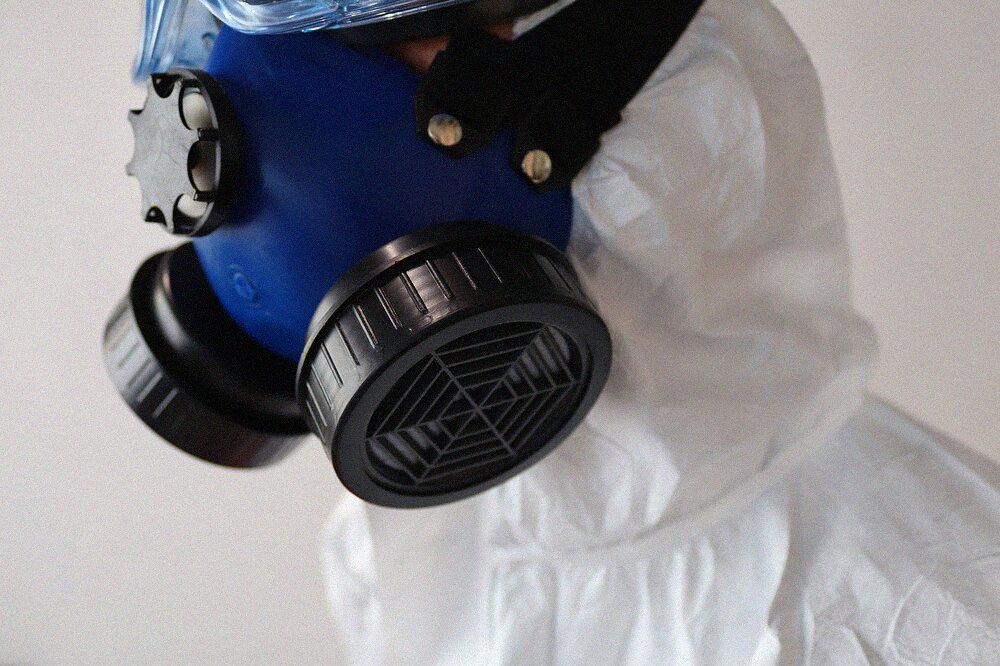
What contamination in a rodent attic consists of
Droppings first, and they are the easiest thing to quantify. UF/IFAS describes roof rat droppings as black, banana shaped and about a quarter to half an inch long. They accumulate where the animals travel and where they rest, so the pattern maps the runs: along top plates, beside ducts, in the corners where a truss meets the deck.
Then urine, which is invisible and does most of the damage. It saturates insulation, stains sheathing and drywall from above, and carries the scent that makes the space attractive. Alongside it sits the rub marks UF/IFAS describes, dark smears along the repeatedly used routes, which are useful evidence long after the animals are gone.
Finally the imported material. Nesting is built from whatever is nearby: shredded paper, insulation fiber, plant material, and in South Florida frequently palm frond debris carried in from the skirt of a nearby tree. Food caches turn up as well, which on a Miami property usually means fruit.
Do I need to worry about hantavirus in a Miami attic?
Hantavirus is the disease most often invoked in attic cleanup marketing, and the Florida picture does not support the way it gets used. The Florida Department of Health notes that hantavirus is present in rodents throughout the United States and has been identified in cotton rats in Florida, and that most human cases in this country have occurred in the western states.
The species detail is the part that gets left out. The cotton rat is a native outdoor field species. The animal in a Miami attic is almost always the roof rat, which UF/IFAS calls the worst and most abundant rodent pest in the state. Those are different animals living in different places.
Respiratory protection during droppings cleanup is still correct practice, on general contamination grounds that apply to any accumulation of animal waste in a confined, unventilated space. That is a reason to do the work properly. It is a poor reason to be sold a job, and any quote that leads with hantavirus is selling on a risk that Florida data does not carry.
What the CDC actually says about rodents and disease
The CDC states that rodents such as rats, mice and chipmunks are known to carry many diseases. It describes two transmission routes: directly, through contact with urine, droppings, saliva or a bite, and indirectly, through fleas, ticks and mites that have fed on an infected rodent.
The CDC gives no total. A figure of thirty five diseases circulates across this industry attributed to the agency, but the page that once carried it now returns an error and the current page publishes no number at all. Sites still printing that figure are citing a link that no longer resolves.
What that leaves is a real and unglamorous position. There are documented rodent-associated illnesses, the transmission routes are known, and the appropriate response to a contaminated attic is competent removal with the right protection rather than alarm. Murine typhus is worth naming here for a Florida reader, because UF/IFAS identifies the roof rat specifically as the reservoir host for it.
Leptospirosis, storms and standing water
Leptospirosis is the most defensible disease to raise on a Miami page, because the CDC connects it directly to the weather here. Cases can increase after hurricanes or floods, the agency says, when people wade through contaminated water or use it for drinking or bathing.
The mechanism is specific and it involves rodents by name. During a hurricane or heavy rain, the CDC describes animal urine in the soil or on other surfaces running into floodwater and contaminating it, and it lists rodents among the animals that spread the disease alongside dogs, livestock and wildlife.
The prevention advice runs the same direction. The CDC recommends preventing rodent infestation by keeping food, water and trash in closed containers and trapping any rodents you see, and it lists eating food that rodents may have had access to among the risk-raising activities. Rodent control is part of the agency post-flood advice, which is a stronger footing for this work than any number a pest company can offer.
Work Out Roughly What Your Job Will Cost
Six questions, using the same published ranges further down this page. It gives you a band to budget against before anyone comes out, and it is deliberately wide, because the roof is the single biggest variable and nobody can price one from a web form.
Why the whole attic gets done rather than the visible piles
Two reasons, and the second is the one that saves money later. The first is coverage: national cost guide HomeGuide notes that an attic, crawl space or basement infestation typically needs the entire room cleaned, because the contamination follows the runs and the runs cross the whole space rather than sitting in a heap by the hatch.
The second is scent. HomeGuide describes the disinfectant step as removing the scents of the animals that can attract more creatures. An attic that has been vacuumed but never treated still smells like an occupied nest site to the next animal that finds the roof line, which turns a cleanup into a partial job with a predictable sequel.
That is also the argument for doing cleanup after the sealing rather than before. Decontaminating a building that is still open means paying to remove a scent trail that a new arrival will replace. The order that works is close the building, empty it, then clean it. Rodent exclusion is the step that makes the cleanup worth buying.
What does attic decontamination include?
Removal of droppings and nesting material, bagging and disposal of contaminated material as waste rather than household trash, and application of a disinfectant across the affected surfaces. National figures put that package at 600 to 1,000 dollars, or 200 to 260 dollars an hour, covering droppings removal, hazardous waste disposal and the disinfectant itself.
Where insulation is fouled, removal of the insulation is a separate scope with its own rate and its own disposal category, and it belongs on a separate line of the quote. Some contractors carry a minimum fee of 1,500 to 3,000 dollars for attic sanitation service, which is worth knowing before a small job gets quoted at a number that looks inexplicable.
What decontamination does not include is repair. Chewed wire, gnawed duct and damaged soffit are their own work and their own prices, covered on rodent damage repair. Keeping them separate is how you compare two bids that describe the same attic.
Access, heat and the practical limits of the work
A Miami attic in summer is a hostile workspace, and that shapes what is realistic. Work happens in short cycles, usually early, and a large space takes more visits than the square footage alone would suggest. Anyone promising a full decontamination of a large attic in a couple of hot afternoon hours is describing a light vacuum.
Access sets the rest of the limits. Low pitch roofs, ducts running the length of the space and truss webs at close spacing all restrict how much of an attic a person can physically reach. An honest scope says which areas were reachable and which were not, rather than implying the whole plane was covered.
Sequencing with the other work matters as well. Cleanup ahead of insulation removal is wasted labor if the insulation is coming out anyway, since the material carrying most of the contamination leaves with it. That call gets made at the inspection, and it is the single biggest lever on the total price of an attic restoration.
How an Attic Cleanup Is Carried Out
Cleanup comes after the building is closed and the animals are out, so the work is not repeating itself while new arrivals come and go.
- 1
Assess the extent
The attic is walked and the contamination mapped against the runs: where droppings accumulate, where nesting sits, how far urine has moved into the insulation, and which areas are physically reachable. That determines whether this is a cleanup or an insulation removal with a cleanup attached.
- 2
Confirm the building is closed and empty
Cleanup goes ahead once trapping has stopped producing catches and the sealing is complete. Decontaminating an open building buys the removal of a scent trail that the next animal onto the roof will simply replace within weeks.
- 3
Remove droppings and nesting material
Solid waste and nesting material are removed and bagged for disposal rather than going out with household trash. Respiratory protection is used throughout, on the general contamination grounds that apply to any confined space holding accumulated animal waste.
- 4
Disinfect the affected surfaces
Disinfectant is applied across the surfaces the animals used. This is the step that removes the animal scent, which national guides describe as an attractant to further rodents, and it is the reason a vacuum alone leaves the job unfinished.
- 5
Report what remains
Anything found that belongs to another trade gets written down with a location: chewed wiring, gnawed duct, stained sheathing, compressed or wet insulation. Each of those is quoted separately so it can be compared line by line against another bid.
What an Honest Cleanup Quote Looks Like
The health case is stated accurately
Hantavirus is the disease most often invoked to sell this work, and in Florida the identified reservoir is the native cotton rat, an outdoor field species, while the Florida Department of Health notes most US cases occur in the western states. Respiratory protection during droppings cleanup remains correct practice on general contamination grounds. The reason to do this work is contamination in a confined space rather than a scare.
Disinfection is scoped, and it has a purpose
National cost guide HomeGuide describes the disinfectant step as removing the scents of the animals that can attract more creatures, and notes that an attic infestation typically needs the entire space cleaned rather than the visible piles. A quote that lists removal without disinfection has left out the part that reduces the chance of a repeat.
Cleanup and insulation are separate lines
National figures put cleanup and decontamination at 600 to 1,000 dollars, or 200 to 260 dollars an hour, covering droppings removal, hazardous waste disposal and disinfectant. Insulation removal is a separate rate with a separate disposal category. Some contractors carry a 1,500 to 3,000 dollar minimum for attic sanitation, which explains price quotes that otherwise look arbitrary.
Find Out What Is Actually Up There
The inspection maps the contamination against the runs and says which areas are reachable, so the cleanup scope is known before it is priced. There is no charge for it.
What Attic Cleanup Costs in Miami
No aggregator publishes Miami figures for this work, so what follows is national data labeled as national. HomeGuide puts rodent cleanup and decontamination at 600 to 1,000 dollars, or 200 to 260 dollars an hour, covering droppings removal, hazardous waste disposal and disinfectant, and notes that an attic infestation typically needs the entire space cleaned. Some contractors hold a minimum fee of 1,500 to 3,000 dollars for attic sanitation service.
| Service | Typical range | What moves the number |
|---|---|---|
| Attic inspection and contamination survey | Free with service | National guides put a standalone rodent inspection at $75 to $150 |
| Cleanup and decontamination | $600 to $1,000 | National figure; droppings removal, hazardous waste disposal and disinfectant |
| Hourly rate where scoped that way | $200 to $260 per hour | National figure; used where access or extent makes a fixed scope impractical |
| Attic sanitation minimum fee | $1,500 to $3,000 | National figure; some contractors apply this floor to attic sanitation service |
| Basic attic cleanout, non-hazardous | $100 to $500 | National figure; removal of debris and stored items ahead of the work |
These are national cost guide figures and they are printed here as national figures. Angi publishes no Miami page for rodent work, and the only Florida metro page is Tampa, which covers exterminating rather than decontamination. The free inspection produces the scope and the figure for your attic.
What Reddit Says About Attic Cleanup in Miami
Cleanup is one of the specific things homeowner threads tell people to ask about by name. The question that recurs is whether the company will clean up and decontaminate or only trap, because the two get bundled into one number often enough that people learn to separate them. The same threads push for itemized quotes generally, splitting trapping, exclusion, cleanup and any ongoing plan into separate lines so a bid can be read.
The warnings are about scope rather than price. Companies that keep returning for months with no change in results come up repeatedly, and so does the experience of paying for a removal and then discovering the attic was never touched. People also compare quotes that differ enormously for work described in identical language, which is usually a difference in what cleanup means to each bidder.
The other theme worth carrying over is the emotional one, which the threads are candid about. People describe losing sleep, feeling that the house has been intruded on, and being told by friends that they are overreacting. A clean, disinfected attic is a large part of what ends that, and it is a reasonable thing to want on the quote as its own line rather than as a footnote.
A Typical Attic Cleanup in Miami
A common call from a household whose trapping finished a month ago
The situation. The noise stopped four weeks back and the sealing was completed at the same time. What remains is a smell in the hallway that is worse on hot afternoons, and a stain appearing on the ceiling drywall above the back bedroom closet.
What gets done. The survey finds droppings along both top plates and a nesting pocket built of shredded paper and palm frond fiber against the gable end. Insulation over the back bedroom is compressed flat along a run and stained through. That section comes out, the solid waste is removed and bagged, and the surfaces are disinfected.
How it turns out. The hallway smell goes with the fouled insulation. The ceiling stain is written up as a separate drywall item so it can be quoted against another bid, and the household has a written note of what was reachable in the attic and what was not.
Attic Cleanup Questions People Actually Ask
Is rodent droppings cleanup dangerous to do myself?
Accumulated animal waste in a hot, unventilated space is worth respecting regardless of which pathogen anybody names. Use respiratory protection, avoid dry sweeping which puts material into the air, and bag waste for disposal rather than putting it in household trash. On the specific scare that gets used to sell this service, hantavirus in Florida has been identified in cotton rats, an outdoor field species, and the Florida Department of Health notes most US cases occur in the western states. That is a reason for sensible practice rather than alarm.
Should cleanup happen before or after the sealing?
After, in almost every case. Decontaminating a building that still has open entry points means paying to remove a scent trail that the next animal onto the roof replaces. National guides describe disinfectant as removing the animal scents that attract more creatures, which only pays off once the openings are closed. The sequence that works is close the inactive openings, trap out what is inside, close the last runs, then clean.
Does the insulation always have to come out?
No. Insulation that is dry, uncompressed and free of droppings can stay, and cleanup then means removing solid waste and disinfecting the surfaces around it. Insulation that has been pressed flat along the runs or soaked by urine is a different decision, because the Department of Energy states that compressed insulation will not deliver its full rated R-value and that wet insulation does not work well. That call gets made at the inspection and it is the biggest single lever on the price.
Will the smell definitely go away after cleanup?
Usually, and the timeline depends on what was producing it. Solid waste and nesting material leave with the removal. Urine held in insulation leaves when the insulation does. A smell that persists after both of those points to something still in the building, most often a carcass in a wall cavity, which is a different job covered on the dead rodent removal page. Anyone who cannot say which of those they are dealing with has not finished looking.
Do I need to leave the house while this is done?
Generally the household stays put. The work is confined to the attic and the access route to it, and the materials in normal use are disinfectants rather than fumigants. Where the scope grows into insulation removal there is more traffic through the house and more dust, so covering the route and the immediate rooms is standard. Anything requiring the household to vacate would be a different kind of treatment entirely and would be told to you well in advance.
Related Services
Attic Insulation Replacement
Removing insulation rodents ruined and restoring the R-value you paid for.
Read more →Dead Rodent Removal
Locating and removing a dead rodent in a wall, attic or duct, and treating the odor.
Read more →Rodent Damage Repair
Chewed wiring, torn ductwork, damaged soffit and the openings left behind.
Read more →More about how this works on the about page, or get in touch to book a free inspection.
Book the Free Attic Assessment
The assessment maps the contamination, says what is reachable, and separates cleanup from insulation and from repair so each is priced on its own line. The phone is answered 24 hours a day.