Rodent Exclusion in Miami, FL
Exclusion is the physical closing of a building against rodents: every opening found, recorded and shut with a material that holds. It is the only part of a rodent job whose result you can still check with a tape measure a year later.
Trapping empties a building. Exclusion keeps it empty. Those are two different pieces of work with two different skill sets, and the gap between a quote that includes both and a quote that quietly includes only the first is where most of the disappointment in this trade lives. A homeowner who pays for eight weeks of trapping on an open building has bought a service that will need buying again.
On a Miami house the sealing work is almost entirely a roof line job. UF/IFAS Extension describes the roof rat as arboreal by nature, similar to squirrels in its ability to move through trees and along vines and wires, using utility lines and tree branches to reach food and water and to enter buildings. An animal that arrives on the roof looks for openings on the roof, which is why the national cost guides that price crawl space screening and basement work describe a house most of this county does not have.
There is a sequence that has to be respected, and it is the reason exclusion cannot simply be booked as a standalone morning of caulk. Openings get identified, the ones with no current traffic get closed, the animals still inside get trapped out, and the last active runs get closed once activity stops. Reversing that order shuts animals inside a sealed building, and what follows is dead rodent removal from a wall cavity.
What exclusion actually means on a Miami house
It means a written list of openings before anything is closed. Each one gets a location, a size, and a note on whether it is carrying traffic. Rub marks and fresh droppings are the evidence for that last part, because a hole that has never been used and a hole that is being used nightly need opposite treatment on day one.
The list on a typical single-story house here runs longer than people expect. Tile eave voids along the front and rear courses. The joint where a soffit panel meets the fascia. Off-ridge, gable and turbine vents with corroded or torn screening. Plumbing vent boots. The sleeve where a refrigerant line or a conduit passes through block. Garage door seals worn open at the bottom corners.
The bird stop, and the void under the first course of tile
Barrel tile sits in a curve. Where the first course meets the eave, that curve lifts off the deck and leaves a row of half round openings running the length of the roof edge. This is a known building condition with a named part made to close it: the bird stop, also called the eave closure. Tile manufacturers supply it as a code-approved metal component, typically 26 gauge galvanized steel or aluminum, and it is available in a ventilated form with weep holes so air still moves under the tile field.
The Department of Energy lists installing bird stopping among the recommended measures in its guidance for clay and concrete tile roofs, alongside sealing the roof deck, drip edges at eaves and rakes, and flashing at penetrations. The component has a manufacturer, a gauge, a purpose and a place in published roofing guidance.
That matters when you compare quotes, because the cheap version of closing a tile eave is a bead of expanding foam pushed into each void from a ladder. Foam is a gap filler with no structural role, it degrades in sun and heat at a roof edge, and a rat chews it out in one night. The right answer at that location is the manufactured closure, fitted along the run, in metal. A quote that never mentions the eave line on a barrel tile house has not looked at the most likely way in.
Is it safe to seal before trapping?
Partly, and the distinction is the whole craft. Openings that show no current traffic can and should be closed first, because every one you close narrows the problem and reduces the number of routes the animals can use once trapping starts. Openings with fresh rub marks and droppings stay open on purpose.
Close everything at once with animals inside and you have built a sealed box around a live population. They do not leave. They chew at the weakest closure, they move deeper into wall cavities, and a proportion of them die in places nobody can reach without cutting drywall. The odor that follows runs for weeks and the repair bill is entirely avoidable.
So the honest answer to a homeowner asking whether sealing can be done this week is that most of it can, and the last few openings wait for the traps to go quiet. Anyone who offers to seal a whole house in one visit while you are still hearing movement overhead is describing a job that ends badly.
Materials that hold, and the quarter inch standard
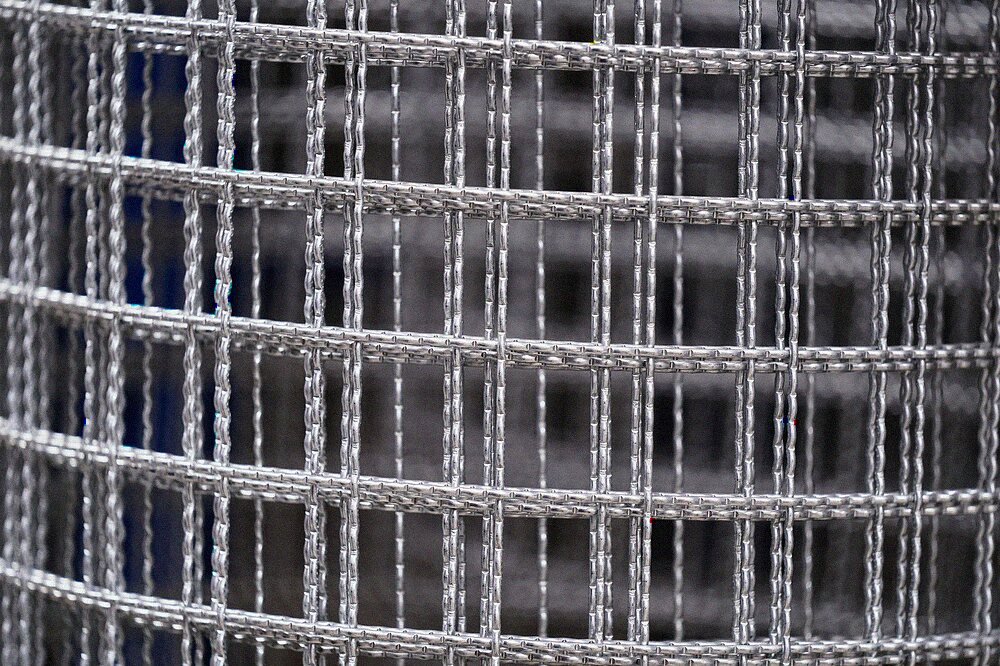
The material list is public and it is short. UF/IFAS gives it as mortar, concrete, sheet metal, or hardware cloth of 19 gauge or heavier with no opening larger than a quarter of an inch. Those four materials cover almost every closure a house needs, and each one resists gnawing in a way that foam, caulk, plastic vent covers and window screen do not.
The quarter inch figure is the one to hold in mind. UF/IFAS puts the openings rodents can pass at a quarter of an inch for mice and half an inch for rats, and sets a quarter of an inch as the rat-proofing standard. Half an inch is already a doorway. The extra quarter is the safety margin that accounts for gnawing, for settlement, and for the fact that nobody measures every gap perfectly from a ladder.
Check the Likely Way In
The openings that matter on a South Florida building are not the ones most homeowners check. Answer four questions and this will tell you where to look first from the ground.
Roof line components in Miami-Dade are code-regulated
Miami-Dade and Broward together form the High Velocity Hurricane Zone. It is a post-Andrew provision, adopted after investigations attributed widespread failure to poor roof attachment and weak connections, and it remains the only region in the country that requires impact resistance of the entire building envelope rather than only the glazed openings.
The consequence for rodent work is specific. A replacement vent, an eave closure or a repaired roof line component here sits inside a code-regulated assembly, so what goes back on the roof needs to be a code-compliant product rather than whatever fits the hole. That is a fair question to put to any bidder: what product is going in, and is it approved for use here.
Palms, branches and the routes onto the roof
Cutting the access routes is the one part of this work a homeowner can genuinely do alone, and it helps. UF/IFAS advises isolating trees from fences, overhead wires and other trees, because rats will run along fence stringer boards and support poles, along phone and cable wires, and along branches. Anything that touches the roof is a ramp.
Palms deserve their own attention here. UF/IFAS records roof rats nesting in the skirts of old fronds on palm trees, which puts a nest site a few feet from your fascia with no ground crossing required. Clearing the dead frond skirt removes harborage and visibility at the same time.
None of this substitutes for closing the building. UF/IFAS records that roof rats will travel 150 yards from the den to reach food or water, so a perfectly pruned yard sits inside the range of several neighboring ones. Trimming lengthens the odds. Sealing settles the matter.
What keeps rats away permanently?
A closed building, and nothing else on the market. UF/IFAS states there are no repellents registered specifically for roof rats. It rejects ultrasonic and electromagnetic devices directly, noting there is no evidence they can drive rodents from their home range and that there is evidence ultrasonic devices can cause hearing loss in pets, especially dogs.
Pets are not the answer either. Because roof rats are so arboreal, UF/IFAS observes, they usually reach attics and fruit trees without ever coming to the ground, and they learn safe travel routes through yards that avoid ground predators. Cats will take dispersing juveniles and rarely handle an adult roof rat inside its own territory.
What is left is the boring, durable option. Close the openings with materials that resist teeth, keep the routes off the roof cut back, and stop leaving food available. Permanence in this trade is a maintenance condition rather than a product you install once.
What separates a complete sealing quote from a partial one
A complete quote counts things. It says how many openings were found, where they are, and what closure each one gets. It names the material. On a tile roof it says what happens at the eave line and which component goes in there. It puts trapping, sealing, cleanup and any ongoing service on separate lines so each can be compared against another bid.
The follow-up question worth asking is who does the work. A company that subcontracts the sealing is quoting you a coordination fee on top of another contractor labor rate, and the person who found the openings is not the person who closes them.
How Exclusion Work Is Sequenced
The order below exists to avoid the two failures that generate the most complaints in this trade: trapping an open building, and sealing an occupied one.
- 1
Survey and record every opening
The roof line, tile eave condition, soffit run, all vents, deck penetrations, attic interior and ground level perimeter get walked in order. Each opening is logged with a location and a size, and the ones carrying traffic are identified from rub marks and fresh droppings rather than guessed at.
- 2
Close the inactive openings
Everything with no current traffic is sealed first, in mortar, concrete, sheet metal or hardware cloth of 19 gauge or heavier with no opening larger than a quarter of an inch. Tile eave voids receive a code-appropriate metal bird stop fitted along the run.
- 3
Trap out what remains inside
Traps go on the confirmed runs and stay put. UF/IFAS advises leaving them in one location for at least a week before moving them, because roof rats are cautious of new objects. Sets are worked dusk to dawn to match a nocturnal animal.
- 4
Close the last active runs
Once catches stop and the attic goes quiet, the remaining openings are closed with the same materials. This is the point at which the building is actually resistant, and it is the step that partial quotes leave out of the price.
- 5
Re-check and cut the access routes
The closures are re-inspected after a few weeks of quiet. Branches and palm skirts giving access to the roof are cut back so the roof stops being reachable, and any contamination left in the attic is quoted as its own line.
Why Sealing Is the Line Item That Decides the Outcome
The eave line gets a named component
On a barrel tile roof the first course leaves a row of half round voids at the eave. The part that closes them is a bird stop, a code-approved metal closure typically supplied in 26 gauge galvanized steel or aluminum, sometimes ventilated with weep holes. The Department of Energy lists installing bird stopping among its recommended measures for clay and concrete tile roofs, which is a better foundation than any pest industry claim.
A quarter of an inch is auditable
UF/IFAS gives the rat-proofing standard as no opening larger than a quarter of an inch, closed in mortar, concrete, sheet metal or hardware cloth of 19 gauge or heavier. Half an inch is an opening a rat can already pass. You can put a tape measure on a finished closure and check that number yourself, which is more than most sealing claims will allow.
The sequence is quoted, and it is checkable
Inactive openings first, trapping second, the last active runs closed when the catches stop. Each stage appears as its own line with its own price, so the sealing is visible in the quote before it is sold. Sealing an occupied building creates a carcass in a cavity, and that failure is entirely a sequencing failure.
Get the Openings Counted First
The inspection produces a written list of every opening with its location, including the tile eave line and the vents, and it is free. That list is what makes two quotes comparable.
What Exclusion Costs in Miami
No cost aggregator publishes a Miami page for this work, so the figures below carry their real labels. The nearest Florida market figures are Tampa, where Angi puts rat exclusion at 550 to 1,642 dollars and describes it as sealing holes, screening roof vents, repairing holes and pruning back the trees rats use as stairs into the house. National guide HomeGuide puts a full rodent eviction plan, meaning exclusion at all entry points plus repairs and a month or more of maintenance visits, at 600 to 1,400 dollars.
| Service | Typical range | What moves the number |
|---|---|---|
| Inspection and opening survey | Free with service | Priced alone, national guides put a rodent inspection at $75 to $150 |
| Exclusion sealing, whole house | $550 to $1,650 | Nearest Florida market figures (Tampa); driven by roof type, eave length and opening count |
| Full rodent eviction plan | $600 to $1,400 | National figure; exclusion at all entry points plus repairs and a month or more of visits |
| Sealing added to a removal job | $100 to $800 | National figure for sealing to prevent future infestation, added to trapping work |
| Roof line sealing of entry points | $150 to $500 | National figure for roof repair to permanently close vermin entry points |
| Rodent exclusion doors | $200 to $400 each | National figure, installed; steel mesh one-way doors used on active runs |
Tampa is cited because it is the only Florida metro with a published rat exterminator cost page, which makes it the nearest same-state, same-climate proxy available. It is printed here as Tampa data. The free inspection produces the figure for your property, with the sealing broken out as its own line.
What Reddit Says About Rodent Exclusion in Miami
Exclusion is where homeowner threads get most specific. The standing advice is to get more than one bid for identical scope, because a single number carries no information, and to demand the quote be itemized so trapping, sealing, cleanup and any ongoing plan sit on separate lines. People also tell each other to ask whether the company performs the repair work itself or only sets traps, since a firm that subcontracts the sealing is charging to manage somebody else.
The red flags cluster tightly. Trapping with no sealing gets described bluntly as harvesting rodents in traps. Sticker shock on exclusion almost always turns out to be sealing work that was never explained before it was priced, so the threads push hard on having the scope described in advance. Quotes that cannot be broken into parts, and long monitoring contracts folded into a removal price, both draw the same suspicion. The spread people report for work described in the same words is wide enough that the recurring question is whether they are being taken advantage of.
The questions they tell each other to bring are the right ones here: what exactly is included, what is a separate line, how many follow-up visits are in the price, and what happens if the animals come back. On a Miami job there is one more that the corpus does not know to ask. What is going in at the tile eave, and is it a metal closure or a can of foam.
A Typical Exclusion Job in Miami
A common call from a 1970s tile roof house after a trapping-only contract ended
The situation. Six weeks of traps set by a previous company, catches that tapered off and then restarted, and no sealing in the scope at any point. Noise overhead returned about ten days after the last visit, loudest along the front of the house at the eave.
What gets done. The survey logs eleven openings, seven of them bird stop voids along the front tile course, plus a lifted soffit return at the carport, two vent screens gone at the gable, and a plumbing boot split by heat. Everything except the carport return and one eave void is closed in metal. Traps go on those two runs, and both are closed when the catches stop.
How it turns out. The house goes quiet at night and stays quiet through the following citrus season. The overhanging ficus limb and the palm skirt at the corner are cut back so the roof stops being reachable, and the fouled insulation over the front bedroom is priced separately so the household can decide on it in its own time.
Exclusion Questions People Actually Ask
Can exclusion be done without any trapping at all?
Only when nothing is living inside, which the inspection determines rather than assumes. If the attic is genuinely empty, sealing on its own is the right and cheapest job. If there is current activity, closing everything at once traps live animals in a sealed building. They chew at the weakest closure, move into wall cavities, and some of them die where nobody can reach them without cutting drywall. The honest version is that most of the sealing can proceed immediately and the last few openings wait for the trapping to go quiet.
How long does exclusion work take on a typical house?
The sealing itself is usually a day or two of work on a single-story house, depending on how much of it is at the eave line and whether tile has to be lifted and bedded back. The calendar is longer than the labor, because the last openings stay open until trapping stops producing catches. National guides put trapping a small number of animals at two to three days and a severe infestation at one to two months, so the sealing gets finished at the far end of whichever of those applies.
Is expanding foam ever acceptable as a seal?
As a backing behind a proper closure it has a role, filling a void behind metal so the closure sits solid. On its own at an exterior opening it fails. Foam has no resistance to gnawing, it breaks down under sun and heat at a roof edge, and it is the most common thing found chewed out on a house that was sealed cheaply. The materials that hold are the ones UF/IFAS names: mortar, concrete, sheet metal, or hardware cloth of 19 gauge or heavier.
Do the vents have to be replaced or can they be screened?
Either can be correct. A sound vent with a failed screen can be re-screened in hardware cloth heavy enough to resist teeth. A vent that is corroded through, cracked or missing its collar gets replaced. In Miami-Dade the replacement matters, because the county and Broward form the High Velocity Hurricane Zone and components at the roof line sit within a code-regulated assembly, so what goes back needs to be a code-compliant product.
Will trimming my trees fix this on its own?
It helps and it does not finish the job. UF/IFAS advises isolating trees from fences, overhead wires and other trees, because rats run along fence stringer boards, support poles, phone and cable lines and branches, and it records roof rats nesting in the skirts of old palm fronds. Cutting those routes removes the easiest access. The same publication records the animals traveling 150 yards from the den, so the yards around you supply routes as well. Closing the building is what settles it.
Related Services
Attic Cleanup & Decontamination
Droppings, nesting material and contamination removed and the space sanitized.
Read more →Attic Insulation Replacement
Removing insulation rodents ruined and restoring the R-value you paid for.
Read more →Dead Rodent Removal
Locating and removing a dead rodent in a wall, attic or duct, and treating the odor.
Read more →More about how this works on the about page, or get in touch to book a free inspection.
Book the Free Opening Survey
The survey covers the tile eave line, the soffit system, every vent and the attic interior, and it produces a written list of openings with locations. The phone is answered 24 hours a day.