Attic Insulation Replacement in Miami, FL
A season of rodent traffic presses blown insulation flat along the runs and urine soaks what is left. Removing and replacing it is usually the biggest number on the quote, and the one worth understanding before it is signed.
Insulation is the material in an attic that absorbs everything. It holds urine, it takes the compression of nightly traffic, and it is where nesting gets built. On a short infestation it survives. On one that ran for a season or more, it is usually the largest single cost of putting the space back.
The performance argument for replacing it is straightforward and it comes from the Department of Energy: insulation which is compressed will not give its full rated R-value, and wet insulation does not work well. Rodent traffic compresses blown insulation into channels and rodent urine wets it. Those are two separate mechanisms acting on the same material, and neither reverses on its own.
What the Department of Energy does not do is put a percentage on it for this case, and neither will this page. What follows instead is the mechanism, the sourced cost per square foot for each stage of the work, and the R-value range a Miami attic should be aiming at. Where the contamination is in the material rather than on it, the job usually begins with attic cleanup and decontamination.
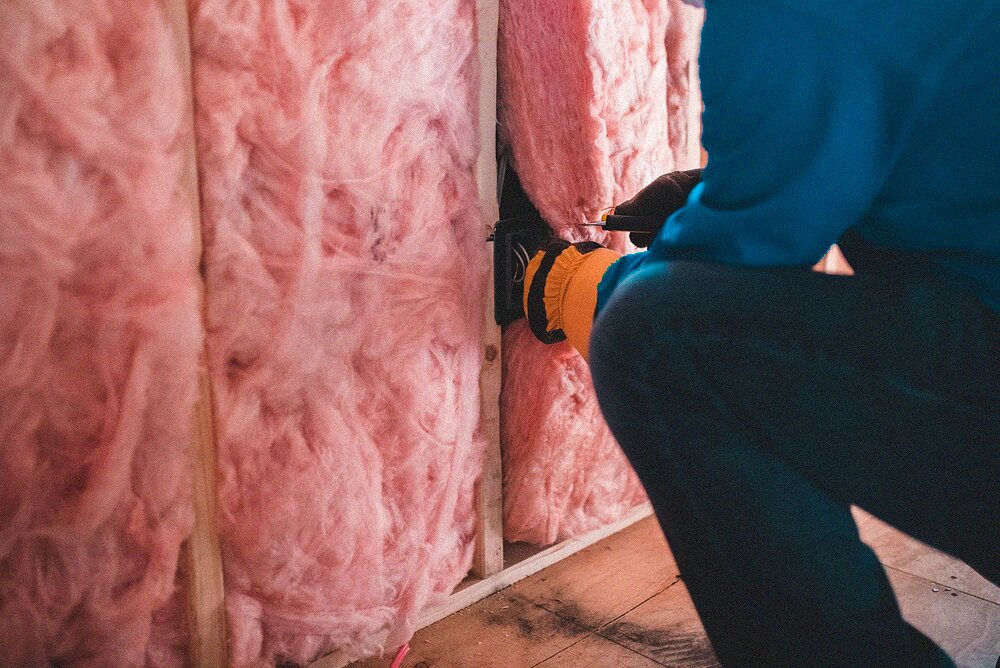
How rodent activity degrades attic insulation
Compression is the first mechanism and the most visible. Rodents use the same routes night after night, and blown insulation along those routes ends up pressed into flat channels that read like paths on the surface of the attic floor. The Department of Energy is direct about the consequence: insulation which is compressed will not give you its full rated R-value.
Wetting is the second. Urine soaks into loose fill and stays there, and the Department of Energy notes plainly that wet insulation does not work well. In a Miami attic, where humidity is high and drying is slow, that saturation persists rather than clearing between seasons.
Displacement is the third and the least discussed. Nesting is built by dragging material aside, so the depth that was blown in evenly becomes uneven. Bare patches of ceiling drywall between heaped piles perform differently from a level layer, whatever the bag on the truck originally claimed.
How do you know if attic insulation needs replacing?
Look at the surface rather than the total depth. Flat channels running between trusses, heaped material where nesting was built, and bare patches of ceiling drywall between them all indicate the layer is no longer doing evenly what it was installed to do.
Then use your nose and the ceiling below. An odor that worsens on hot afternoons, and staining appearing on ceiling drywall from above, both point to saturation rather than surface contamination. Surface droppings can be removed. Material that has taken urine through its depth leaves with the insulation.
Age is a separate reason to look. National guidance suggests insulation be inspected after fifteen to twenty years to confirm the R-value still meets code standards. If an infestation has arrived at a house whose attic was last insulated in the nineties, the two questions can reasonably be answered in the same visit.
R-value targets for a Miami attic
The general Energy Star recommendation for most attics is R-38. Miami sits in Climate Zone 1, the warmest zone in the country, and the commonly cited Department of Energy range for that zone is R-30 to R-49.
The Florida Building Code minimum ceiling value is a separate question and it deserves care. The code sets a minimum that varies by location within the state, and the exact figure for a given property is worth confirming against the code text or with the local building department rather than taking from a contractor quote or from a page like this one.
The practical point for a rodent job is that replacement is the moment to fix an under-insulated attic, because the labor of getting material in and out is already being paid for. Topping up over contaminated material is the version that saves money now and costs it twice.
Removal, sanitation and replacement are three separate costs
Removal alone runs 1 to 2 dollars per square foot nationally. That covers extracting the existing material and disposing of it, and it is the figure that applies where the plan is to strip the attic and stop there for the moment.
Remove and replace runs 2 to 6 dollars per square foot for an attic with no damage or contamination. A rodent job is by definition not that attic, and the same guides note that removing damaged and potentially hazardous insulation can reach over 25 dollars per square foot. That range is the reason two quotes for the same square footage can look like they describe different buildings.
Replacement material has its own rates. Blown-in runs 1.00 to 2.80 dollars per square foot installed, and batt and roll runs 0.80 to 2.60. Those numbers sit inside the remove-and-replace figure rather than on top of it, which is worth checking on any quote that lists both.
Work Out Roughly What Your Job Will Cost
Six questions, using the same published ranges further down this page. It gives you a band to budget against before anyone comes out, and it is deliberately wide, because the roof is the single biggest variable and nobody can price one from a web form.
Air sealing, and where it overlaps with exclusion
Air sealing an attic runs 350 to 3,000 dollars nationally and is frequently bundled into an insulation estimate, described as an essential step for insulating a vented attic effectively. It means closing the gaps where conditioned air moves between the house and the attic: top plate penetrations, wire and pipe chases, recessed light housings, the attic hatch itself.
That list overlaps heavily with the interior half of a rodent sealing scope. The same top plate penetration that leaks conditioned air is the one a rodent uses to move from a wall cavity into the attic, and both trades close it with a similar approach.
Which is why the sequencing is worth planning rather than leaving to whichever crew arrives first. Doing the rodent exclusion and the air sealing as one coordinated pass avoids paying twice for access into the same attic, and it avoids a new insulation layer being installed over openings the rodent work then has to reopen.
Flex duct in the same space
A Miami attic is rarely just insulation. It carries the air handler and a run of insulated flex duct threading between trusses, and that duct occupies the same space the rodents are nesting in.
Duct insulation is a specified value rather than an optional wrap, and gnawing degrades it in exactly the way it degrades the attic floor. Torn duct insulation shows as sweating on the outer jacket and as a room that will not hold temperature, and the damage often sits on the top face where nobody sees it from the hatch.
It changes the insulation work in a practical way as well. Duct runs restrict how much of an attic a person can reach, and they sit on top of the material that has to come out. An honest scope says how the duct will be worked around and what condition it is in, and duct replacement itself belongs on rodent damage repair as its own line.
Is it worth replacing insulation after rats?
Sometimes yes and sometimes no, and the answer follows the material rather than the sales pitch. Where the contamination is on the surface, removal of solid waste and disinfection deals with it and the insulation stays. Where it is through the depth of the material, or where the layer has been compressed flat along the runs, the material is no longer performing and it is holding scent.
The energy argument is real and it is modest in scale. The Department of Energy position is that compressed insulation does not deliver its rated R-value and wet insulation performs poorly, which means a degraded layer costs something every month on a cooling bill in a climate that runs air conditioning nearly year round. Nobody can honestly put a dollar figure on that for your specific house.
The stronger argument is usually the scent one. National guides describe disinfection as removing the animal scents that attract more creatures, and saturated insulation is the largest reservoir of that scent in the building. Removing it removes the invitation as well as the smell.
How Insulation Replacement Is Carried Out
The work comes after the building is closed and empty, because material installed into an open attic is material that will be contaminated again.
- 1
Assess and measure
The attic is measured and the condition mapped: where the layer is compressed, where it is saturated, where nesting has displaced it, and how much of the space can physically be reached around duct runs and low pitch. Square footage and existing depth determine the scope.
- 2
Confirm the building is sealed
Removal and replacement go ahead once trapping has stopped and the sealing is complete. New material blown into a building that still has open entry points is an expensive way to give the next arrival a fresh nest.
- 3
Remove the existing material
Contaminated insulation is vacuumed out and bagged for disposal in the appropriate category. National figures put removal alone at 1 to 2 dollars per square foot, with damaged and potentially hazardous material reaching over 25 dollars per square foot.
- 4
Sanitize the exposed deck
With the material out, the ceiling deck, top plates and framing are cleared of remaining solid waste and disinfected. This is the only point in the life of the attic when those surfaces are accessible, so anything needing attention up there gets recorded now.
- 5
Install the replacement layer
New material goes in to a specified depth and R-value. National rates run 1.00 to 2.80 dollars per square foot for blown-in and 0.80 to 2.60 for batt and roll. Any air sealing being done in the same pass is completed before the new layer covers the penetrations.
How to Read an Insulation Quote After Rodents
The performance claim is stated without a percentage
The Department of Energy states that insulation which is compressed will not give its full rated R-value and that wet insulation does not work well. Rodent traffic compresses blown insulation and rodent urine wets it. Any quote attaching a specific percentage loss to rodent contamination is quoting a number nobody has published, and that is a reasonable thing to ask a bidder to back up.
Removal and replacement are priced separately
National figures put removal alone at 1 to 2 dollars per square foot, and remove and replace at 2 to 6 dollars per square foot for an attic with no damage or contamination. Removing damaged and potentially hazardous material can reach over 25 dollars per square foot. A single lump sum hides which of those three situations a bidder thinks they are in.
The R-value target is stated and checkable
The general Energy Star recommendation for most attics is R-38, and for Climate Zone 1, which covers Miami, the commonly cited Department of Energy range is R-30 to R-49. A quote should say what depth and what R-value the new layer reaches. The Florida Building Code minimum for a specific property is worth confirming with the building department rather than taken on trust.
Get the Attic Measured
The inspection measures the space, maps which areas are compressed or saturated, and separates removal from replacement so both are visible on the quote. There is no charge for it.
What Insulation Replacement Costs in Miami
These are national cost guide figures labeled as national, since no aggregator publishes a Miami page for this work. Removal alone runs 1 to 2 dollars per square foot. Remove and replace runs 2 to 6 dollars per square foot for an attic with no damage or contamination, and removing damaged and potentially hazardous insulation can reach over 25 dollars per square foot, which is the range a serious rodent job lives in.
| Service | Typical range | What moves the number |
|---|---|---|
| Attic measurement and condition survey | Free with service | Square footage, existing depth, compression and saturation mapped before pricing |
| Insulation removal only | $1 to $2 per sq ft | National figure; extraction and disposal of non-hazardous material |
| Remove and replace, undamaged attic | $2 to $6 per sq ft | National figure; the baseline before contamination is factored in |
| Removal of damaged or hazardous material | Up to $25+ per sq ft | National figure; the upper end applies where contamination is heavy |
| Blown-in replacement | $1.00 to $2.80 per sq ft | National figure, installed; sits inside the remove-and-replace range |
| Batt and roll replacement | $0.80 to $2.60 per sq ft | National figure, installed |
| Attic air sealing | $350 to $3,000 | National figure; often bundled into an insulation estimate and overlapping with exclusion |
Every figure above is national. Angi has no Miami page for rodent work and the only Florida metro page is Tampa, which covers exterminating rather than insulation. The free inspection produces the square footage and the scope for your attic, with removal and replacement shown as separate lines.
What Reddit Says About Attic Insulation Replacement in Miami
Insulation is where the sticker shock in homeowner threads usually lands, and the pattern behind it is consistent: the cost was never explained before it was quoted. People describe accepting a removal price and then meeting a restoration number several times larger, and the advice that follows is always the same, which is to get the whole scope described in advance and itemized into separate lines.
The vetting advice applies with extra force here because the numbers are bigger. Get more than one bid for identical scope. Ask whether the company performs the restoration work itself or subcontracts it. Ask what square footage is being priced and at what rate, since the difference between removal only and remove-and-replace is the difference between two very different quotes. Threads also warn about bundling, where a large insulation figure is folded into a removal price so neither part can be judged.
The other recurring point is timing. People who paid for new insulation before the building was sealed describe paying again, which is the single most avoidable expense in this whole trade. The order that holds up is closing the openings, emptying the building, then putting new material in.
A Typical Insulation Job in Miami
A common call from a house that ran an infestation through two citrus seasons
The situation. Activity noticed the previous January, dealt with piecemeal, noticed again the following November. Sealing and trapping are now finished. The attic floor shows flat channels along both sides of the duct run and heaped material at the gable, with a persistent smell in the hallway on hot days.
What gets done. The attic measures out and the existing blown layer comes out entirely, since the compression and the saturation both follow the runs rather than sitting in one corner. The deck and top plates are cleared and disinfected while exposed, the air sealing at the top plate penetrations is completed in the same pass, and a new blown layer goes in to a specified depth.
How it turns out. The hallway smell leaves with the old material. The back rooms hold temperature better than they did, and the household has a written note of the depth and R-value installed, which is the figure to check against the building department if the property is ever sold or permitted.
Insulation Questions People Actually Ask
Can I just add new insulation on top of the old?
Not over contaminated material. Topping up is a legitimate approach on a clean attic that is simply under-insulated, and it is the wrong approach where the existing layer holds urine and nesting, because the contamination and the scent stay in the building under a new blanket. National guides describe disinfection as removing the animal scents that attract further rodents, and burying a saturated layer does the opposite. Where the existing material is dry, uncompressed and free of droppings, adding depth is reasonable.
How much R-value does rodent damage actually cost me?
Nobody has published a percentage for this case and this page will not invent one. What is established is the mechanism. The Department of Energy states that insulation which is compressed will not give its full rated R-value and that wet insulation does not work well, and rodent traffic compresses blown insulation while rodent urine wets it. A layer that is flat along the runs and saturated in patches is underperforming its rating, and by how much depends on the specific attic.
What R-value should a Miami attic have?
The general Energy Star recommendation for most attics is R-38, and Miami sits in Climate Zone 1 where the commonly cited Department of Energy range is R-30 to R-49. The Florida Building Code sets a minimum ceiling value that varies by location within the state, so the figure that applies to a specific property is worth confirming with the local building department or against the code text. Any quote should state the depth and R-value it is installing.
Does the flex duct need doing at the same time?
It gets inspected at the same time, and whether it needs work depends on what the gnawing reached. Miami attics carry insulated flex duct running through the same space the rodents nest in, and torn duct insulation shows up as sweating on the jacket and as rooms that will not hold temperature. Duct replacement is its own trade at its own rate, national figures put it at 25 to 55 dollars per linear foot, and it belongs on a separate line rather than folded into an insulation price.
How long does the whole attic restoration take?
Removal and reinstallation on a typical single-story attic is usually a matter of days rather than weeks, and the constraint is access and heat rather than the material itself. Work in a Miami attic happens in short cycles, generally early in the day, so a large space takes more visits than the square footage suggests. The longer part of the calendar is what comes before it, since the removal waits until trapping has stopped producing catches and the sealing is finished.
Related Services
Dead Rodent Removal
Locating and removing a dead rodent in a wall, attic or duct, and treating the odor.
Read more →Rodent Damage Repair
Chewed wiring, torn ductwork, damaged soffit and the openings left behind.
Read more →Condo & HOA Rodent Control
Shared walls, chases and trash rooms, scoped so the association and the unit owner each know what they cover.
Read more →More about how this works on the about page, or get in touch to book a free inspection.
Book the Free Attic Measurement
The visit measures the space, maps compression and saturation, and prices removal and replacement as separate lines. The phone is answered 24 hours a day.