Condo and HOA Rodent Control in Miami, FL
In a shared building the difficult part is rarely the biology. It is working out who is authorized to approve the work and which budget it comes out of, while the animal keeps moving through structure that belongs to everybody.
A unit owner hears something running above the bedroom ceiling at one in the morning and calls a pest company. In a house that call starts a straightforward job. In a mid-rise or high-rise condominium it usually stalls, because above that ceiling there is no attic. There are plenums, plumbing chases, electrical risers and the space between the slab and the ceiling assembly, and every one of those runs past the unit boundary into structure the owner has no authority over.
That is the whole difference. The soffit-and-attic model that governs a single-family Miami job assumes a roof line, a vented attic and one decision maker. A tower has none of the three. What it has instead is a continuous internal network that connects floors and stacks, a set of shared refuse points that feed a population, and a governing structure that decides what can be touched.
The animal itself is usually the same one. UF/IFAS Extension calls the roof rat the worst rodent pest in the state of Florida and the most abundant, and records that it travels up to 150 yards from its den to reach food or water. In a building, that radius covers every unit in a stack and the trash room at the bottom of it. Which is why the practical unit of work here is the building rather than the apartment.
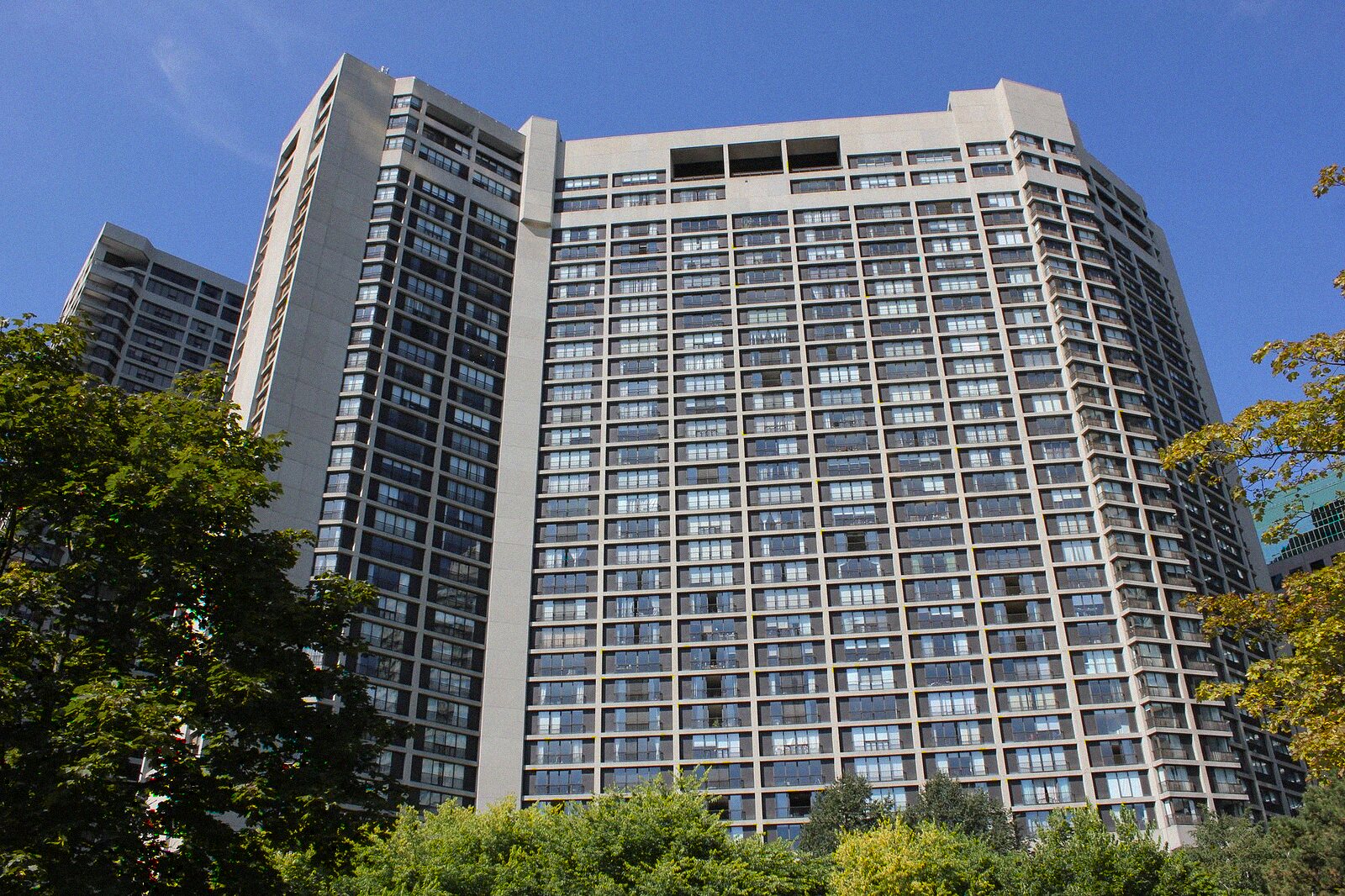
Why noise in a unit ceiling is usually a building matter
The void above a condominium ceiling is service space. Supply and return air paths, sanitary and vent stacks, domestic water risers, low voltage and electrical runs all pass through it, and the penetrations cut for them are the openings a rodent uses to move between floors. A stack of units is connected vertically in a way that a row of houses never is.
So the animal heard in unit 704 may be denning three floors down and using the same riser every night. Sealing the ceiling in 704 changes the route without changing the population. Anyone who has watched a building try to solve this apartment by apartment has seen the complaints migrate rather than stop.
The practical consequence is that the survey has to run the shared structure: the chases, the corridor ceilings, the trash room, the mechanical spaces, the roof and the exterior envelope. That is a building-level scope, and it needs someone with authority over the building to commission it. A rodent inspection written at that scope gives a board something it can act on.
Who is authorized to approve the work, and whose budget pays?
The honest answer is that the declaration and the association rules for the specific building decide it, and they vary. What follows is how these jobs are usually scoped in practice, which is a different thing from a statement of what any particular document requires. Read the declaration, or have the manager read it, before assuming anything.
Work usually treated as the unit owner's: everything inside the unit boundary, the penetrations under sinks and behind appliances where supply lines and drains pass through cabinet backs and walls, the dishwasher and refrigerator cavities, the dryer vent connection, and the kitchen sanitation inside the unit. These are small openings, they are genuinely the owner's to close, and closing them stops an animal in the chase from entering the living space.
Work usually treated as the association's: the shared chases and risers themselves, trash rooms, chute doors and the dumpster or compactor area, common corridors and their ceiling voids, the roof, the exterior envelope and any louvers or vents in it, and landscaping including tree limbs and palms in contact with the building. That list is where the population lives and feeds, so it is the list that decides whether the problem ends.
Sealing one unit moves the animals along the chase
A unit-by-unit response has a predictable arc. The first owner complains, a contractor foams the visible gaps in that apartment, the noise stops there and starts next door or one floor up. Two or three rounds of that and the association has paid for several partial jobs and still has a building population.
The professional sequence does not change in a tower, though the geometry does. Every opening gets identified and recorded, the openings without active traffic get closed, the animals still inside get trapped, and the last runs get closed once activity stops. The materials standard is the same as anywhere: openings closed with mortar, concrete, sheet metal or hardware cloth of 19 gauge or heavier with no opening larger than a quarter inch. The detail is covered on the rodent exclusion page.
What changes is that the sequence has to be run across the whole shared network at once. Closing floor seven while floors five and six stay open produces the migration pattern above. It also produces the other failure, which is a sealed chase with an animal inside it and an odor problem in a corridor ceiling a week later.
Trash rooms, chutes and the dumpster enclosure
A residential tower concentrates food waste at fixed points and moves it down a shaft. Chute doors that no longer latch, gaps at the chute collar where it passes each slab, a compactor room with a gap under the door, and a dumpster enclosure with an unsealed gate bottom together supply a reliable food source at a fixed address.
No amount of sealing holds while that continues. UF/IFAS records the roof rat as very fond of fruit and willing to travel 150 yards from the den for food or water, and a chute room is closer than that to every unit above it. The animals will keep arriving because the reason to arrive has not been removed.
The fixes are mostly housekeeping and hardware. Self-closing chute doors that actually close, a sealed collar at each floor, sweeps on the compactor and trash room doors, a rodent-resistant enclosure gate, and a collection schedule that does not leave bags on the floor overnight. This is unglamorous work and it does more for a building than a further round of trapping.
Is an HOA subdivision the same job as a condominium tower?
No, and treating them the same is a common way to waste money. In an HOA-governed community of single-family houses, each house has its own roof, its own attic and its own roof line, so the structural job is the ordinary Miami job: the tile eave and its bird stops, the soffit run, the vents and the deck penetrations. The homeowner owns that work.
The association's role in that setting is usually the exterior common area rather than the structure. Tree limbs and palms in contact with roofs, the skirts of dead fronds that UF/IFAS names as roof rat nest sites, common landscaping, the perimeter, shared amenity buildings and the community dumpster or valet trash arrangement. Those are the shared conditions that keep pressure on every house on the street.
Townhouse and low-rise attached stock sits between the two. There is often a continuous attic or a shared roof line running across several units, which behaves like a tower internally while looking like a house from the driveway. A survey that treats an attached row as one structure catches this. A survey booked for one address rarely does.
What makes an association bid comparable to another one
Boards are asked to compare numbers that describe different work. The way out of that is to require the same itemization every homeowner is advised to require, at building scale: survey and findings as one line, exclusion sealing as its own line with the openings listed and located, trapping as its own line with the number of service visits stated, cleanup and decontamination separate again, and any ongoing program priced separately with its term and its cancellation terms written down.
Two further lines matter in a shared structure. Access, because reaching a riser or a corridor ceiling void may involve cutting and patching drywall and that is either in the price or it is not. And documentation, because a board that cannot show owners what was found and what was closed will be having the same argument at the next meeting.
Where a resale or a transfer approval is in play, the association may also want written confirmation of what was found and what was done at a given date. That is covered on the rodent clearance letters page.
How a Shared-Building Rodent Job Is Run
The sequence is the same one used on a house. The difference is that it runs across the whole shared structure at once, because a partial scope in a connected building relocates the problem instead of ending it.
- 1
Define the structure rather than the address
Before anything is priced, the boundary of the job gets set: which stacks, which chases, which common areas, which roof sections, and whether attached units share a continuous attic. A survey booked at one apartment number in a connected building will produce a partial answer.
- 2
Survey the shared network and the refuse points
Chases, risers, corridor ceiling voids, mechanical rooms, trash rooms, chute collars, the compactor and dumpster enclosure, the roof and the exterior envelope, plus the affected units. Every opening is recorded with a location so the board can see the list.
- 3
Close the inactive openings first
Openings with no current traffic get sealed in mortar, concrete, sheet metal or hardware cloth of 19 gauge or heavier, with nothing left larger than a quarter inch. Active runs identified by rub marks and droppings stay open at this stage.
- 4
Trap through the structure while the runs are open
Sets go along the confirmed runs across floors rather than in a single unit. UF/IFAS advises leaving traps in one place for at least a week before moving them, because roof rats are cautious of new objects.
- 5
Close the last runs and fix the food source
Remaining openings get closed once catches stop. Alongside that, the chute doors, door sweeps, enclosure gate and collection routine get corrected, because sealing alone does not hold while a fixed food source stays open.
What Makes Association Work Different
There is no unit attic to inspect
A mid-rise or high-rise unit has no attic at all. What sits above the ceiling is service space carrying air paths, plumbing stacks, water risers and electrical runs through slab penetrations that connect floors vertically. That is why a rodent heard in a unit ceiling is usually in shared structure, and why the scope that resolves it is a building scope rather than an apartment scope.
The food source is at a fixed address
Trash rooms, chute collars and the dumpster enclosure concentrate food waste at known points on every floor. UF/IFAS records that a roof rat will travel 150 yards from its den for food or water, which puts every unit in a stack inside range of the chute room below it. Correcting the refuse points is what makes sealing hold.
Roof line components here are code-regulated
Miami-Dade and Broward form the High Velocity Hurricane Zone, a post-Andrew provision and the only US region requiring impact resistance of the entire building envelope. For a board that means a replacement roof vent or eave closure fitted during exclusion work has to be a code-compliant product, which is a fair question to put to any bidder in writing.
Get the Building Surveyed
The survey covers the shared chases, the corridor voids, the trash points, the roof and the affected units, and it produces a written list of openings with locations. There is no charge for it.
What Association Rodent Work Costs in Miami
No cost aggregator publishes a Miami figure and none publishes a condominium figure at all, so the ranges below are built from the nearest Florida market data and national guides, both labeled. The nearest Florida market figures are Tampa, where a rat exterminator visit averages around 1,078 dollars with a typical range of 441 to 1,716 dollars and exclusion sealing runs 550 to 1,642 dollars. A building job scales with the number of stacks and shared spaces in scope rather than with square footage of any one unit.
| Service | Typical range | What moves the number |
|---|---|---|
| Building survey and written findings | Free with service | A standalone rodent inspection runs $75 to $200 nationally and is usually credited against the job |
| Trapping across affected stacks | $440 to $1,720 per structure | Nearest Florida market figures (Tampa); driven by the number of units and chases in scope and the duration |
| Exclusion sealing, shared structure | $550 to $1,650 per structure | Number of openings, access to risers and corridor voids, and whether drywall cutting and patching is needed |
| Trash room and chute corrections | Quoted per point | Door sweeps, chute collar sealing, enclosure gate work; scope depends on the condition of the existing hardware |
| Common area cleanup and decontamination | $600 to $1,000 per area | National guide figure; driven by the size of the space and how far contamination has spread |
Tampa is cited because it is the only Florida metro with a published rat exterminator cost page, and it is printed here as Tampa data. A building scope is quoted per structure after the survey, with each element on its own line so a board can compare two bids against the same list.
What Reddit Says About Condo and HOA Rodent Control in Miami
Homeowner threads are consistent about how to vet a rodent company, and every item transfers to a board. Get more than one bid written against identical scope, because a single number cannot be interpreted. Require the quote itemized so trapping, sealing, cleanup and any ongoing program are separate lines. Ask whether the company performs the repair work itself or only sets traps, since a firm that subcontracts the sealing is quoting a coordination job. Local operators are preferred over national brands repeatedly and explicitly.
The red flags carry over as well. Poison-only plans with no sealing draw the sharpest criticism in the corpus. Trapping with nothing sealed gets described as harvesting rodents in traps. Bundled monitoring contracts folded into a removal price come up constantly, as does the difficulty of comparing prices that vary wildly for work described in the same words. People also report companies returning for months with no change in the result, which in a building means several owners paying attention to the same failure.
The questions they tell each other to ask are the ones to put in a board packet: what exactly is included and what is a separate line, will you clean up and decontaminate or only trap, how many follow-up visits are in the price, and what happens if they come back. On an association job add the two the corpus has no reason to know about: what is the scope boundary of this quote, and who is doing the trash room.
A Typical Association Call
A common call from a manager at a mid-rise with complaints from three units in one stack
The situation. Night noise reported from a seventh floor ceiling, then from a fifth floor kitchen wall two weeks later, then from a corridor ceiling. A contractor had already foamed the visible gaps in the seventh floor unit. The trash room on the fifth floor has a chute door that no longer latches.
What gets done. The survey runs the stack rather than the units: open collar penetrations where the sanitary stack passes two slabs, a gap at the chute collar, no sweep on the trash room door, and rub marks along the riser. The inactive openings are closed, traps go along the marked runs across three floors, and the last openings are closed once catches stop.
How it turns out. The complaints stop across the stack rather than moving to the next unit, and the board has a written list of what was found and what was closed to put in front of owners. The chute door hardware and the trash room sweep are handled by the building, which removes the reason the population was there.
Questions Boards and Owners Ask
The noise is in my ceiling, so is this my problem or the association's?
In a mid-rise or high-rise there is no attic above your ceiling, so the space the animal is using is almost always shared service space carrying plumbing, air paths and electrical runs between floors. In practice that means the association usually controls the response, because the structure involved is common. The declaration and the association rules for your specific building are what actually decide it, so ask the manager to check the documents before anyone commits to paying. What is clearly yours is the inside of the unit: the penetrations under sinks, behind appliances and at the dryer vent.
Can the association just treat the units that complained?
It can, and the usual result is that complaints move rather than stop. A stack of units is connected vertically through risers and chases, so closing one apartment changes the route the animals take without reducing the population. Two or three rounds of that costs more than one building scope would have. It also risks the other failure, which is sealing a chase with animals still inside it and producing an odor problem in a corridor ceiling a week later. Running the shared network in one pass avoids both.
Does an HOA of single-family houses work the same way?
No. In a subdivision of detached houses, each house has its own roof, attic and roof line, so the structural work is the ordinary Miami job and it belongs to the homeowner. The association's part is usually the exterior common area: tree limbs and palms touching roofs, the skirts of dead fronds that UF/IFAS names as roof rat nest sites, common landscaping, the perimeter and the shared refuse arrangement. Attached townhouses are the exception, because a continuous attic across several units behaves like a tower even though it looks like a house.
What should be in a quote before the board votes on it?
Survey and findings, exclusion sealing with the openings listed and located, trapping with the number of service visits stated, cleanup and decontamination, and any ongoing program with its term and cancellation terms, all as separate lines. Add two lines specific to a building: access, meaning who cuts and patches drywall to reach a riser and whether that is in the price, and documentation, meaning what the board receives in writing at the end. Two bids written against the same list can be compared. Two lump sums cannot.
Do owners need to be inside their units for this work?
For the shared structure, generally no. The chases, corridor voids, trash rooms, mechanical spaces, roof and exterior can be surveyed and sealed without unit access. Access is needed where an opening is inside a unit boundary, where trapping needs to be set in a unit with confirmed activity, or where a wall or ceiling has to be opened to reach a run. Buildings usually handle this by scheduling a small number of access windows and giving notice under whatever procedure the association normally uses for entry.
Related Services
Commercial Rodent Control
Restaurants, groceries, warehouses and multifamily properties with inspection exposure.
Read more →Rodent Clearance Letters
Documentation for a real estate closing, a lender or an insurer.
Read more →Rodent Prevention Plans
Ongoing monitoring for properties backing onto canals, groves or open land.
Read more →More about how this works on the about page, or get in touch to book a free inspection.
Book the Free Building Survey
The survey covers the shared chases, the trash points, the roof and the affected units, and it produces a written list a board can act on. The phone is answered 24 hours a day.