Rodent Damage Repair in Miami, FL
Rodents chew wiring, pipe, duct, soffit and drywall, and most of that damage sits where nobody looks until the trapping is over. Repair is its own trade with its own rates, and it belongs on its own line of the quote.
UF/IFAS Extension describes what roof rats do to a building without any dramatization: they chew through wires, potentially starting fires, gnaw through plastic and lead water pipes, make holes in walls and cause other structural damage. The same publication notes they will chew through lead and plastic pipe specifically to reach water.
There is no reliable count of rodent-caused fires despite the figures that circulate this industry, and none appears on this page. What the extension specialist wrote is enough on its own: chewed wiring can start a fire, and that is the reason damaged cable gets found and replaced rather than noted and left.
Repair work is separate from removal, separate from sealing and separate from cleanup, and keeping those four apart on a quote is what lets a homeowner compare two bids at all. The sealing side of it is covered on rodent exclusion, and the two overlap at the roof line where a repair and a closure are frequently the same piece of work.
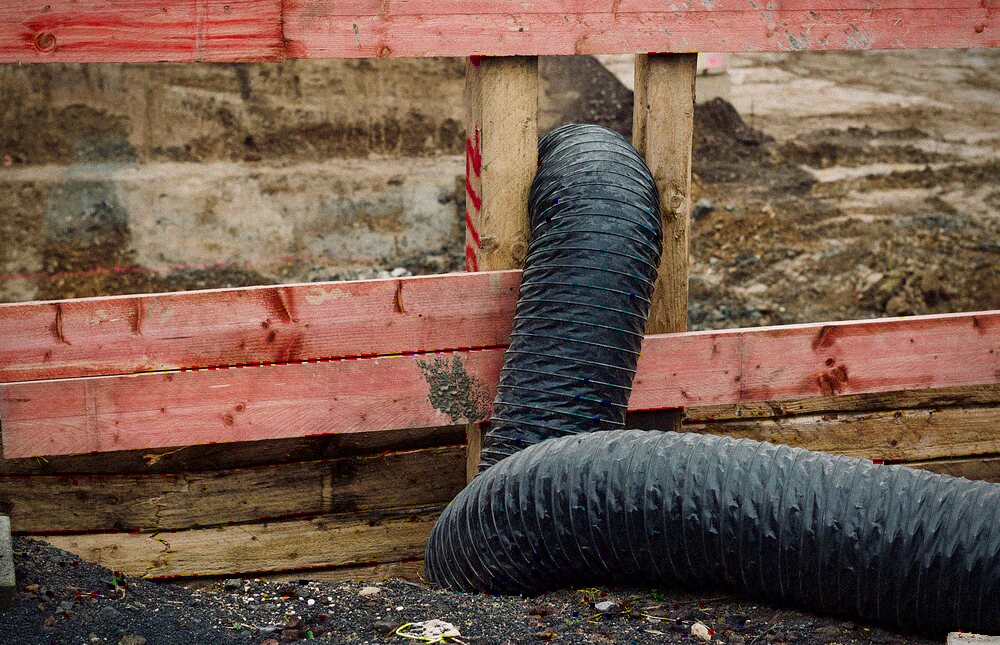
What rodents chew, and why
Wiring first, because it is the most consequential and the least visible. Cable running across the top of ceiling joists sits directly on the routes the animals use, and insulation gets stripped along the run rather than at a single point. The damage is usually found from above during attic work rather than from any symptom in the room below.
Pipe next, and the motivation is specific. UF/IFAS records that roof rats will chew through lead and plastic pipes to reach water, which makes a supply line in a hot attic a target rather than an obstacle. A small breach in a plastic line above a ceiling produces staining long before anybody connects it to a rodent.
Then the building fabric itself. Holes in walls, gnawed edges on soffit panels and fascia, chewed duct insulation, and drywall opened from the cavity side. National cost guides list holes up to two inches wide around the floor among the standard signs, which is a useful reminder that the damage is not confined to the roof line.
Storms, tile roofs and the opening that follows
The Department of Energy describes what happens to a tile roof in a storm. During a hurricane, tornado, high winds or hail, clay or concrete roof tiles can be damaged or blown off the roof, exposing the underlayment, flashing and sheathing, and if a tile breaks, debris from it can strike other tiles and lead to a progressive cascading failure.
That is a roofing description rather than a rodent one, and the connection is left for the reader to draw because the honest version is obvious and unquantified. A roof edge that has lost tile, or lost the closure under the first course, is a roof edge with a rat-sized void running along it.
There is no published figure for rodent activity after a Florida storm, and none is offered here. What is worth doing after serious weather is checking the roof line on the same walk as the rest of the roof, because a displaced tile course can lift an eave closure with it and neither shows from the ground.
Does homeowners insurance cover rodent damage?
Usually no, and the summary worth quoting comes from a national cost guide rather than from an insurer. HomeGuide states that homeowners insurance typically does not cover rodent removal or the damage rodents cause, because most policies list these infestations as preventable problems arising from negligence.
The same summary draws a distinction that matters. Damage from larger wildlife may be considered a covered accident, with the detail varying by policy, so the treatment of a raccoon in a soffit and a rat in the same soffit can differ on the same page of the same document.
A first-party statement from an insurer or a state regulator would carry more weight than a cost guide summary, and none was obtained, so this page presents it as what it is. The practical instruction is the same either way: read the policy before assuming, and get the repair itemized so a claim, if there is one, has something to attach itself to.
Wiring, pipe and duct
Electrical rewiring to replace chewed cable runs 5 to 17 dollars per square foot nationally. That range covers a wide variety of situations, from a single damaged run in an accessible attic to rewiring across a ceiling plane where access is poor.
Ductwork replacement runs 25 to 55 dollars per linear foot nationally. In a Miami attic this is a routine finding rather than an exotic one, because the insulated flex duct threads through the same space the animals are nesting in, and the damage often sits on the top face of the run where the hatch view never reaches.
Plumbing repair after gnawing is priced by the specific fix rather than by a rate, and the tell is usually staining rather than sound. Where a rodent job has produced a ceiling stain, both a chewed supply line and a saturated insulation layer are candidates, and separating those two is worth doing before either is repaired.
Check the Likely Way In
The openings that matter on a South Florida building are not the ones most homeowners check. Answer four questions and this will tell you where to look first from the ground.
Soffit, fascia, drywall and the roof line
Soffit and fascia repair runs 9 to 34 dollars per linear foot nationally, and it is the item that most often doubles as exclusion. A soffit panel pulled from the fascia is both the damage and the entry point, so repairing it correctly closes an opening at the same time.
Interior finishes carry their own national rates: drywall at 300 to 1,500 dollars and up, ceiling repair at 200 to 500 dollars, and siding at 2 to 14 dollars per square foot. Roof repair specifically for permanently sealing vermin entry points is put at 150 to 500 dollars.
One caution belongs with those numbers. National guides note that roof or water damage arising from rodent damage, while rare, can reach into the tens of thousands. That is the tail rather than the typical case, and it is the reason a stain on a ceiling gets investigated rather than painted over.
What should be repaired first?
Anything electrical. UF/IFAS states that rats chew through wires and can potentially start fires, and a damaged cable run does not improve by waiting. Where attic work has exposed stripped insulation on a run, that is the item that comes off the list first regardless of what else is on it.
Then anything that is also an opening. A pulled soffit return, a chewed vent screen, a gnawed hole through a wall: repairing these closes entry points and stops the building being re-occupied, so they earn their place ahead of cosmetic work.
Cosmetic and comfort items come last and can genuinely wait. A ceiling stain, a chewed section of duct insulation on a room that is merely warm, drywall in a closet. Sequencing this way spreads the cost over months rather than presenting the whole restoration as one number to be signed at the kitchen table.
Repair and sealing as one sequence
At the roof line the two trades are barely separable. The bird stop at a tile eave, the vent that lost its collar, the soffit return that pulled away: each of these is a repair and a closure at once, and doing them as two visits means paying twice for access at height.
That argues for scheduling the repair alongside the last stage of the sealing rather than months afterward. Once trapping has stopped producing catches and the final runs are being closed, the roof line is already being worked and the repair items are already listed.
Interior repair follows a different clock. Drywall, ceiling and finish work sit behind the attic work, because opening a ceiling after new insulation has been blown in undoes part of what was just paid for. Where the attic material is coming out anyway, attic insulation replacement is the right moment to handle anything that needs access from above.
How Repair Work Is Scoped and Sequenced
Repair follows the removal and the sealing, and it gets itemized by trade so each line can be compared against another bid.
- 1
List the damage with locations
Every chewed run, gnawed duct section, pulled panel, holed wall and stained surface is recorded with a location during the attic and roof line work. A list with locations is what makes a second opinion possible, since a lump sum for repairs tells a homeowner nothing.
- 2
Separate the urgent from the cosmetic
Electrical damage goes first, on the basis UF/IFAS states plainly, that rats chew through wires and can potentially start fires. Items that are also entry points go second, since repairing them closes the building. Finish work sits behind both and can be scheduled.
- 3
Price by trade at published rates
Each item is quoted against the work it actually is: rewiring at a square foot rate, duct at a linear foot rate, soffit and fascia at a linear foot rate, drywall and ceiling as their own items. Bundling them hides which parts of a bid are expensive.
- 4
Do the roof line work in one pass
Repairs at height are scheduled alongside the final stage of the sealing, because the eave, the vents and the soffit run are being worked already. Paying twice for access to the same roof line is the most avoidable line on a restoration.
- 5
Handle interior work after the attic
Drywall, ceiling and finish repairs come after any insulation removal or replacement, so nothing newly installed has to be disturbed to reach a repair that was known about from the start.
How to Read a Rodent Repair Quote
The fire risk is stated without a statistic
UF/IFAS Extension states that roof rats chew through wires and can potentially start fires, gnaw through plastic and lead water pipes, make holes in walls and cause other structural damage. Figures claiming rodents cause a set share of fires of unknown origin circulate widely across this industry with no primary source behind them, and none appears here. Damaged cable gets replaced because it is damaged.
Every trade carries its own published rate
National figures put electrical rewiring at 5 to 17 dollars per square foot, ductwork replacement at 25 to 55 dollars per linear foot, and soffit and fascia at 9 to 34 dollars per linear foot, with drywall at 300 to 1,500 dollars and up, ceiling at 200 to 500 dollars, and siding at 2 to 14 dollars per square foot. A quote that shows those lines separately can be checked.
The insurance position is put honestly
National cost guide HomeGuide summarizes it this way: homeowners insurance typically does not cover rodent removal or rodent damage, because most policies treat infestation as a preventable problem arising from negligence, while damage from larger wildlife may be treated as a covered accident depending on the policy. That is a cost guide summary rather than an insurance industry statement, and the policy is what governs.
Get the Damage Listed
The inspection records every chewed run, gnawed duct section and pulled panel with a location, so the repair can be quoted by trade rather than as one number. There is no charge for it.
What Rodent Damage Repair Costs in Miami
The figures below are national cost guide rates labeled as national, because no aggregator publishes a Miami page for rodent work. They are the standard post-removal repair line items, and the same guides note that roof or water damage arising from rodent damage, while rare, can reach into the tens of thousands, which is the reason a ceiling stain gets investigated rather than painted.
| Service | Typical range | What moves the number |
|---|---|---|
| Damage survey with locations | Free with service | Chewed runs, duct sections, panels and stains recorded during the attic and roof line work |
| Electrical rewiring | $5 to $17 per sq ft | National figure; replacing cable with chewed insulation |
| Ductwork replacement | $25 to $55 per linear ft | National figure; flex duct in the attic is a routine finding here |
| Soffit and fascia repair | $9 to $34 per linear ft | National figure; frequently doubles as closing an entry point |
| Drywall repair | $300 to $1,500+ | National figure; includes openings cut to reach damage or a carcass |
| Ceiling repair | $200 to $500 | National figure; usually follows staining from above |
| Siding repair | $2 to $14 per sq ft | National figure |
| Roof line sealing of entry points | $150 to $500 | National figure for roof repair permanently closing vermin entry points |
These are national figures printed as national figures. Angi publishes no Miami page for rodent work, and the only Florida metro page is Tampa, which covers exterminating rather than repair. The free inspection produces the itemized list for your property so each trade can be priced and compared on its own.
What Reddit Says About Rodent Damage Repair in Miami
Repair is where homeowner threads report the widest price spread, and the advice reflects it. Get more than one bid for identical scope. Insist on an itemized list rather than a single restoration figure, because a lump sum for repairs cannot be compared against anything. Ask whether the company performs the repair work itself or subcontracts it, since a firm coordinating other trades is adding a margin on top of their rates.
The specific question people tell each other to ask is whether the chew-ins really need repairing now or whether trapping alone will do. The consensus in the threads is that entry points get closed regardless, because leaving them open guarantees a return, while purely cosmetic damage can wait. That distinction is the useful one to bring to a quote: which of these items is also an opening.
The other warning is about sequencing. People describe paying for interior finish work and then having it disturbed when the attic work followed, or having new insulation installed over a repair that had to be reached later. Doing the roof line repairs alongside the final sealing, and the interior work after the attic is finished, is what the experience in those threads keeps pointing back to.
A Typical Repair Job in Miami
A common call from a house where the attic work turned up more than expected
The situation. Trapping is finished and the sealing is nearly complete. During the attic work the technician records stripped insulation on a cable run above the kitchen, two sections of flex duct with the outer jacket opened, a soffit return pulled away at the carport, and a stain spreading on the ceiling of a back bedroom.
What gets done. The cable run is dealt with first as an electrical item. The soffit return is repaired in the same pass as the last of the roof line sealing, which closes an opening and fixes the panel in one visit. The duct sections are quoted at a linear foot rate as their own line, and the ceiling stain is investigated before anything is painted.
How it turns out. The stain turns out to be saturated insulation rather than a plumbing breach, so it leaves with the attic material and the ceiling is repaired afterward. The household ends up with four separate priced lines instead of one restoration figure, and it schedules the two that can wait for the following quarter.
Repair Questions People Actually Ask
Do I really need the chewed wiring repaired now?
Treat it as the first item on the list. UF/IFAS Extension states that rats chew through wires and can potentially start fires, and that is the publishable version of the risk, with no statistic attached because no credible one exists. Damage to cable insulation does not heal and it is rarely visible from the room below, so it is usually found during attic work and then forgotten once the noise stops. National figures put rewiring at 5 to 17 dollars per square foot, and the scope depends heavily on how accessible the run is.
Will my insurance pay for any of this?
Probably not, and the policy is what governs. National cost guide HomeGuide summarizes the position as homeowners insurance typically not covering rodent removal or rodent damage, because most policies list these infestations as preventable problems arising from negligence, and notes that damage from larger wildlife may be treated as a covered accident depending on the policy. That is a cost guide summary rather than a statement from an insurer, so read the policy language before assuming either way, and keep the repair itemized.
Can the repair be done at the same time as the sealing?
At the roof line it should be. The eave closures, the vents and the soffit run are frequently both the damage and the entry point, so repairing them closes the building at the same time, and doing it in one pass avoids paying twice for access at height. Interior work runs on a different clock and follows the attic, because opening a ceiling after new insulation has been installed undoes part of what was just paid for.
How do I know a ceiling stain is from the rodents?
You investigate before repainting, because there are two candidates and they lead to different repairs. Saturated attic insulation above the ceiling produces staining and an odor that worsens on hot afternoons. A chewed supply line produces staining that is usually cleaner and more persistent, and UF/IFAS records that roof rats will chew through lead and plastic pipes to reach water. Checking from above during the attic work settles which one it is, and the fix differs completely.
What if the damage turns out to be much bigger than expected?
It happens and the numbers can climb. National guides note that roof or water damage arising from rodent damage, while rare, can reach into the tens of thousands, particularly where an opened roof line has been letting water in alongside the animals. The protection against being surprised by that is an itemized list produced during the attic and roof line work, with locations, so the scope is known before anybody starts. Anything found later gets added as its own line rather than absorbed into a lump sum.
Should the damaged duct be repaired or replaced?
It depends what the gnawing reached. Damage confined to the outer jacket on a short section can sometimes be made good, while a run with the insulation opened along its length gets replaced, because the insulation value is what the duct is there to hold. National figures put ductwork replacement at 25 to 55 dollars per linear foot. In a Miami attic this comes up often, since insulated flex duct runs through the same space the animals nest in, and the damage frequently sits on the top face of the run where nobody sees it from the hatch.
Related Services
Condo & HOA Rodent Control
Shared walls, chases and trash rooms, scoped so the association and the unit owner each know what they cover.
Read more →Commercial Rodent Control
Restaurants, groceries, warehouses and multifamily properties with inspection exposure.
Read more →Rodent Clearance Letters
Documentation for a real estate closing, a lender or an insurer.
Read more →More about how this works on the about page, or get in touch to book a free inspection.
Book the Free Damage Survey
The survey records every chewed run, duct section and pulled panel with a location, and prices the repair by trade rather than as a single restoration figure. The phone is answered 24 hours a day.